Made-to-measure vs custom wedding dress
Made to measure and custom are often used as one phrase. They are related but not the same. Here is what each means for your gown.

Made-to-measure vs custom wedding dress
The two phrases appear together so often that many brides assume they mean the same thing. They are related, but they answer different questions.
Understanding the difference matters most at one moment. When you are deciding where, and how, your gown will be made.
The short answer
Made to measure means a gown is cut and constructed to your exact measurements rather than a standard size. Custom means the design itself is created or adapted for you. At Lucidbride the two meet in every commission. Each gown begins from a couture direction, then is shaped to your measurements, silhouette and wedding setting.
What made to measure means
Made to measure is a method of construction. The pattern for your gown is drafted from your own measurements, not adjusted down from a size chart.
This is different from alteration. An altered gown starts as a standard size and is taken in or let out afterward. A made-to-measure gown starts as you, from the first line of the pattern.
The difference shows in the places alteration struggles to reach. The line of a corseted bodice, the balance of a waistline, the fall of a skirt cut for your height.
What custom means
Custom describes the design decisions. The neckline you choose, the lace and where it lives on the body, the depth of a back, the length of a train.
A fully custom gown is designed around your brief rather than picked from a rack. It can begin from an existing direction or from a conversation, but the outcome is a design that did not exist before you.
Custom is where a gown stops being a product and becomes a commission.
Where the two meet
In serious couture work, the terms are not rivals. They are two halves of the same promise.
A gown can be made to measure without being custom, faithfully reproducing a fixed design in your measurements. And a design can be custom on paper yet cut to a standard size. Neither half alone gives the fit and the identity most brides are actually looking for.
This is why Lucidbride works from couture directions. Each direction in the collections is a starting language for silhouette, fabric and detail. Your commission takes that language and shapes it entirely around you.
Why the distinction matters for your body
Standard sizing is built on averages, and almost no one is an average. A size that fits the bust compromises the waist. A length cut for a chart ignores your height and your shoes.
Alteration can chase these differences, but it always works against a pattern drawn for someone else. There are limits to how far a seam can travel before the design begins to distort.
Made to measure removes the chase entirely. The bodice is drafted for your proportions, the waist sits where your waist is, and the hem is cut for the way you will actually stand on the day.
Custom then does the same for identity. The neckline that suits your frame, the detail that reflects your setting, the structure that lets you move the way you want to move.
Fit and identity, resolved at the pattern instead of repaired at the end. That is the practical meaning of the two terms together.
What neither term means
A little honesty prevents disappointment later, so two clarifications are worth making.
Neither term means unlimited revision. A couture commission moves through agreed decisions, confirmed in order, which is what protects the timeline and the work itself.
And neither term means copying. Inspiration images are welcome and useful, but a respectful atelier will not reproduce another designer's gown. It will translate what you love about it into an original that is yours.
How to choose your path
Ask any house you are considering three questions. Is the pattern drafted from my measurements. Which design elements can I decide. And how will I see the gown progressing.
The answers reveal quickly whether you are buying a size or commissioning a gown. The custom process page shows how Lucidbride answers all three, and the FAQ covers what can and cannot be customized.
Choose the path that treats your measurements as the beginning of the work, not a correction at the end of it.
Questions brides ask
Is made to measure the same as bespoke?
The terms overlap, and different houses use them differently. Bespoke usually implies both a pattern drafted from your measurements and a design shaped for you. What matters is not the label but what the process actually includes.
Is a custom gown more expensive than made to measure?
Not automatically. Each gown is priced by its design, fabric and detail, so a restrained custom design can cost less than an ornate fixed one. Ask for the pricing approach at inquiry rather than assuming.
Can I have a dress from a photo copied exactly?
No respectful atelier copies another designer's work. What you can do is share the image and name what draws you to it. Those elements become the starting point for a design of your own.
Do I need in-person fittings for made to measure?
No. Measurements are taken at home with guidance, reviewed by the atelier before production, and the gown is constructed with considered margins for the final fit on arrival.
The vocabulary matters less than the method. Look for the house that begins with you.
If you are planning a custom wedding dress, begin with your wedding date and bridal direction.



Bridal Guidance
Made-to-measure vs custom wedding dress
Made to measure and custom are often used as one phrase. They are related but not the same. Here is what each means for your gown.
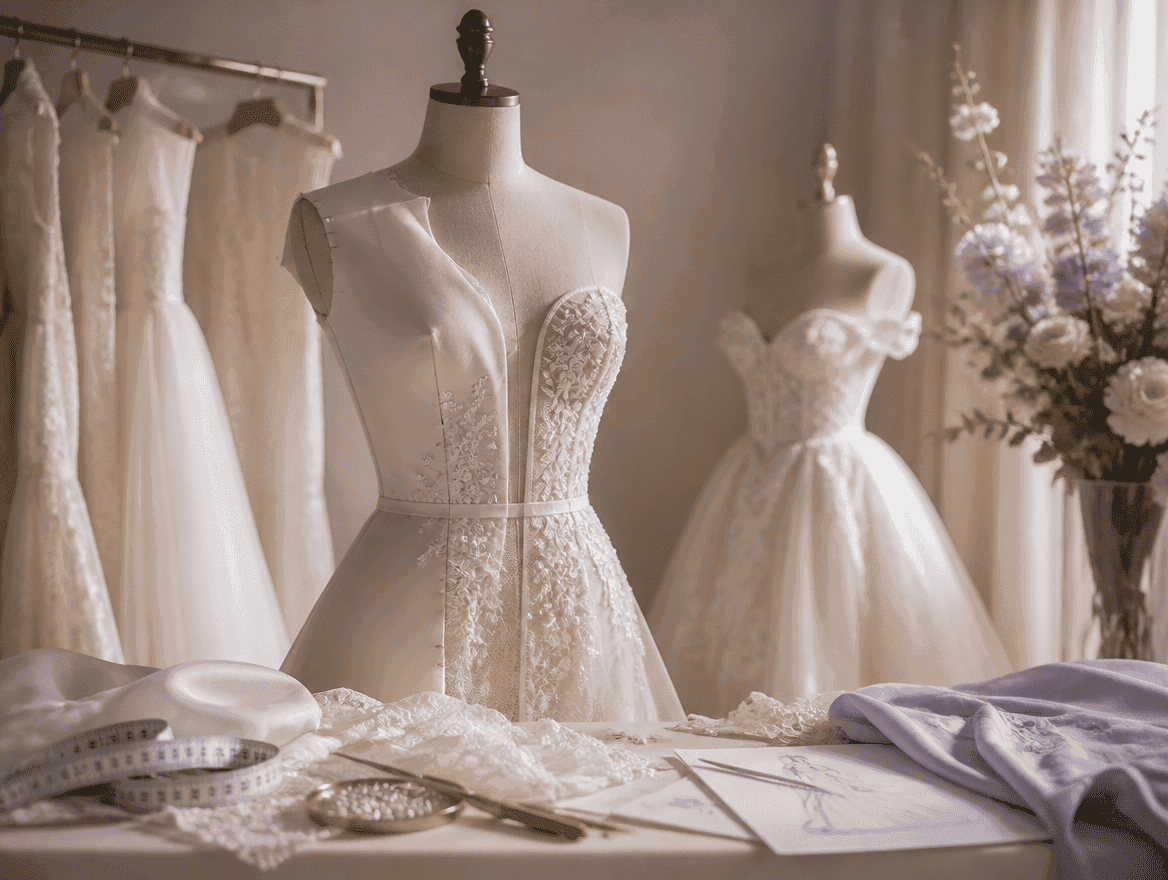
Made-to-measure vs custom wedding dress
The two phrases appear together so often that many brides assume they mean the same thing. They are related, but they answer different questions.
Understanding the difference matters most at one moment. When you are deciding where, and how, your gown will be made.
The short answer
Made to measure means a gown is cut and constructed to your exact measurements rather than a standard size. Custom means the design itself is created or adapted for you. At Lucidbride the two meet in every commission. Each gown begins from a couture direction, then is shaped to your measurements, silhouette and wedding setting.
What made to measure means
Made to measure is a method of construction. The pattern for your gown is drafted from your own measurements, not adjusted down from a size chart.
This is different from alteration. An altered gown starts as a standard size and is taken in or let out afterward. A made-to-measure gown starts as you, from the first line of the pattern.
The difference shows in the places alteration struggles to reach. The line of a corseted bodice, the balance of a waistline, the fall of a skirt cut for your height.
What custom means
Custom describes the design decisions. The neckline you choose, the lace and where it lives on the body, the depth of a back, the length of a train.
A fully custom gown is designed around your brief rather than picked from a rack. It can begin from an existing direction or from a conversation, but the outcome is a design that did not exist before you.
Custom is where a gown stops being a product and becomes a commission.
Where the two meet
In serious couture work, the terms are not rivals. They are two halves of the same promise.
A gown can be made to measure without being custom, faithfully reproducing a fixed design in your measurements. And a design can be custom on paper yet cut to a standard size. Neither half alone gives the fit and the identity most brides are actually looking for.
This is why Lucidbride works from couture directions. Each direction in the collections is a starting language for silhouette, fabric and detail. Your commission takes that language and shapes it entirely around you.
Why the distinction matters for your body
Standard sizing is built on averages, and almost no one is an average. A size that fits the bust compromises the waist. A length cut for a chart ignores your height and your shoes.
Alteration can chase these differences, but it always works against a pattern drawn for someone else. There are limits to how far a seam can travel before the design begins to distort.
Made to measure removes the chase entirely. The bodice is drafted for your proportions, the waist sits where your waist is, and the hem is cut for the way you will actually stand on the day.
Custom then does the same for identity. The neckline that suits your frame, the detail that reflects your setting, the structure that lets you move the way you want to move.
Fit and identity, resolved at the pattern instead of repaired at the end. That is the practical meaning of the two terms together.
What neither term means
A little honesty prevents disappointment later, so two clarifications are worth making.
Neither term means unlimited revision. A couture commission moves through agreed decisions, confirmed in order, which is what protects the timeline and the work itself.
And neither term means copying. Inspiration images are welcome and useful, but a respectful atelier will not reproduce another designer's gown. It will translate what you love about it into an original that is yours.
How to choose your path
Ask any house you are considering three questions. Is the pattern drafted from my measurements. Which design elements can I decide. And how will I see the gown progressing.
The answers reveal quickly whether you are buying a size or commissioning a gown. The custom process page shows how Lucidbride answers all three, and the FAQ covers what can and cannot be customized.
Choose the path that treats your measurements as the beginning of the work, not a correction at the end of it.
Questions brides ask
Is made to measure the same as bespoke?
The terms overlap, and different houses use them differently. Bespoke usually implies both a pattern drafted from your measurements and a design shaped for you. What matters is not the label but what the process actually includes.
Is a custom gown more expensive than made to measure?
Not automatically. Each gown is priced by its design, fabric and detail, so a restrained custom design can cost less than an ornate fixed one. Ask for the pricing approach at inquiry rather than assuming.
Can I have a dress from a photo copied exactly?
No respectful atelier copies another designer's work. What you can do is share the image and name what draws you to it. Those elements become the starting point for a design of your own.
Do I need in-person fittings for made to measure?
No. Measurements are taken at home with guidance, reviewed by the atelier before production, and the gown is constructed with considered margins for the final fit on arrival.
The vocabulary matters less than the method. Look for the house that begins with you.
If you are planning a custom wedding dress, begin with your wedding date and bridal direction.
Timeless advice,delivered to you.
No noise. Just thoughtful bridal guidance.
By subscribing, you agree to receive Lucidbride Journal emails. You can unsubscribe at any time. Read our Privacy Policy.
Timeless advice,delivered to you.
No noise. Just thoughtful bridal guidance.
By subscribing, you agree to receive Lucidbride Journal emails. You can unsubscribe at any time. Read our Privacy Policy.
Timeless advice, delivered to you
Guides, inspiration and atelier stories, straight to your inbox.
By subscribing, you agree to receive Lucidbride Journal emails. You can unsubscribe at any time. Read our Privacy Policy.