A-line vs mermaid vs ball gown wedding dresses
A-line, mermaid or ball gown. What each silhouette does best, and how venue, movement and proportion decide between them.
A-line vs mermaid vs ball gown wedding dresses
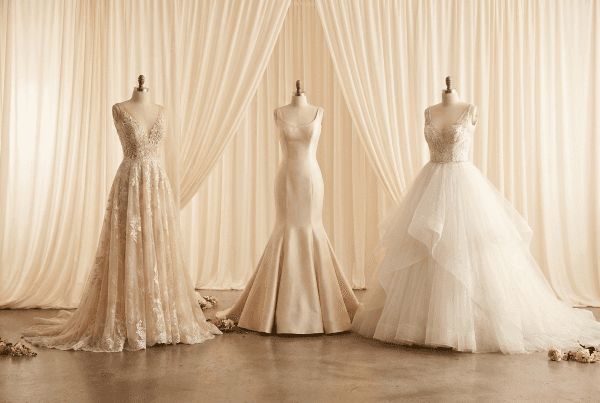
The difference between the three great silhouettes is simple to state. An A-line is fitted through the bodice and flares gently from the waist. A mermaid is fitted through the bodice, waist and hips, flaring at or below the knee. A ball gown pairs a fitted bodice with a full skirt that begins at the waist.
Choosing between them is a question of proportion, venue and movement rather than trend. This guide gives each silhouette its honest case, then shows how to decide.
The short answer
Choose an A-line for balance and ease: it flatters the widest range of bodies and settings. Choose a mermaid for presence and shape: it celebrates the figure and commands close attention. Choose a ball gown for grandeur: it transforms the bride and fills formal rooms. All three are cut to your measurements in a made-to-measure commission, which softens most of the classic warnings about each.
What does an A-line do best?
The A-line is the diplomat of bridal silhouettes. The fitted bodice gives definition, the flaring skirt gives ease, and the line suits gardens, city halls and cathedrals alike.
It flatters by geometry, drawing a clean triangle from waist to hem that balances almost any proportion. It also moves well: walking, sitting and dancing ask nothing of it.
If you are torn between comfort and shape, the A-line usually is the answer to the tension.
What does a mermaid do best?
The mermaid is the silhouette of intention. Fitted through the body to the knee, it shows the figure rather than suggesting it, then releases into a flare that gives every step a rhythm.
It rewards structure. Couture corsetry and a pattern cut to your measurements are what let a mermaid fit closely and still let you breathe, eat and dance.
Choose it when you want the gown to feel like presence rather than costume, particularly for elegant evening ceremonies and intimate venues where details are seen up close.
What does a ball gown do best?
The ball gown is transformation. A fitted, often corseted bodice above a full skirt creates the most dramatic proportion in bridal, and grand venues answer to it.
Volume balances as well as impresses. Fuller hips disappear into the skirt, a defined waist becomes the center of the design, and height gains presence.
Its honest considerations are practical: a full skirt has weight, needs space and prefers formal settings. In a couture build, structure carries most of that weight for you.
How do venue and movement decide it?
Put the three silhouettes in your actual venue.
A grand interior or palace garden flatters a ball gown and gives a mermaid an audience. A coastal terrace or civil ceremony suits an A-line or a softer mermaid that moves in air. A small, elegant restaurant dinner argues for fitted lines over volume, simply because of space.
Then picture the day's movement: stairs, sand, dance floors, car doors. The silhouette that survives your real schedule gracefully is telling you something.
Can the silhouettes be combined?
Increasingly, yes, and some of the most interesting couture designs live between categories.
A fitted gown with built-in structured skirt volume reads as a ball gown in photographs and a fitted line in person. A fit and flare sits between A-line ease and mermaid shape. Dropped and basque waists borrow ball gown drama for fitted silhouettes.
Several of these hybrid directions appear in the collections, and a made-to-measure commission can tune exactly where on the spectrum your gown sits. The custom process is where that tuning happens.
Where does the train fit into the decision?
The train belongs to this conversation, because each silhouette carries length differently.
A ball gown absorbs a long train naturally; the volume is already speaking that language. A mermaid turns its train into theatre, since the fitted line makes the release at the hem the entire gesture. An A-line takes a train gracefully at any length, from sweep to cathedral, one more example of its flexibility.
Think practically as well. A longer train wants a bustle plan for the evening, and outdoor ground has opinions about white fabric. In a made-to-measure commission, train length is cut for your venue and your height rather than taken from a chart.
Questions brides ask
Which is more comfortable, A-line, mermaid or ball gown?
Comfort follows fit more than silhouette. That said, the A-line asks the least of the wearer, the ball gown carries weight that structure must manage, and the mermaid depends most on precise cut.
Which silhouette photographs best?
Each photographs differently. Ball gowns own wide shots and grand staircases, mermaids own portraits and movement, A-lines are consistent everywhere. Your photographer's style is worth a thought.
Can I change silhouette during the day?
Some designs are built for it, with elements that restyle between ceremony and evening. If a two-mood day appeals to you, raise it at the design stage so the construction is planned for it.
Which silhouette suits a destination wedding?
Lighter A-lines and fluid mermaids travel and move best in outdoor settings. A full ball gown can absolutely travel too; it simply deserves a packing and transport plan, which the atelier advises on.
Three silhouettes, three sentences: ease, presence, grandeur. The right one is the sentence that sounds like your day.
If one of the three kept your attention, that is your starting direction.



Style Advice
A-line vs mermaid vs ball gown wedding dresses
A-line, mermaid or ball gown. What each silhouette does best, and how venue, movement and proportion decide between them.

A-line vs mermaid vs ball gown wedding dresses
The difference between the three great silhouettes is simple to state. An A-line is fitted through the bodice and flares gently from the waist. A mermaid is fitted through the bodice, waist and hips, flaring at or below the knee. A ball gown pairs a fitted bodice with a full skirt that begins at the waist.
Choosing between them is a question of proportion, venue and movement rather than trend. This guide gives each silhouette its honest case, then shows how to decide.
The short answer
Choose an A-line for balance and ease: it flatters the widest range of bodies and settings. Choose a mermaid for presence and shape: it celebrates the figure and commands close attention. Choose a ball gown for grandeur: it transforms the bride and fills formal rooms. All three are cut to your measurements in a made-to-measure commission, which softens most of the classic warnings about each.
What does an A-line do best?
The A-line is the diplomat of bridal silhouettes. The fitted bodice gives definition, the flaring skirt gives ease, and the line suits gardens, city halls and cathedrals alike.
It flatters by geometry, drawing a clean triangle from waist to hem that balances almost any proportion. It also moves well: walking, sitting and dancing ask nothing of it.
If you are torn between comfort and shape, the A-line usually is the answer to the tension.
What does a mermaid do best?
The mermaid is the silhouette of intention. Fitted through the body to the knee, it shows the figure rather than suggesting it, then releases into a flare that gives every step a rhythm.
It rewards structure. Couture corsetry and a pattern cut to your measurements are what let a mermaid fit closely and still let you breathe, eat and dance.
Choose it when you want the gown to feel like presence rather than costume, particularly for elegant evening ceremonies and intimate venues where details are seen up close.
What does a ball gown do best?
The ball gown is transformation. A fitted, often corseted bodice above a full skirt creates the most dramatic proportion in bridal, and grand venues answer to it.
Volume balances as well as impresses. Fuller hips disappear into the skirt, a defined waist becomes the center of the design, and height gains presence.
Its honest considerations are practical: a full skirt has weight, needs space and prefers formal settings. In a couture build, structure carries most of that weight for you.
How do venue and movement decide it?
Put the three silhouettes in your actual venue.
A grand interior or palace garden flatters a ball gown and gives a mermaid an audience. A coastal terrace or civil ceremony suits an A-line or a softer mermaid that moves in air. A small, elegant restaurant dinner argues for fitted lines over volume, simply because of space.
Then picture the day's movement: stairs, sand, dance floors, car doors. The silhouette that survives your real schedule gracefully is telling you something.
Can the silhouettes be combined?
Increasingly, yes, and some of the most interesting couture designs live between categories.
A fitted gown with built-in structured skirt volume reads as a ball gown in photographs and a fitted line in person. A fit and flare sits between A-line ease and mermaid shape. Dropped and basque waists borrow ball gown drama for fitted silhouettes.
Several of these hybrid directions appear in the collections, and a made-to-measure commission can tune exactly where on the spectrum your gown sits. The custom process is where that tuning happens.
Where does the train fit into the decision?
The train belongs to this conversation, because each silhouette carries length differently.
A ball gown absorbs a long train naturally; the volume is already speaking that language. A mermaid turns its train into theatre, since the fitted line makes the release at the hem the entire gesture. An A-line takes a train gracefully at any length, from sweep to cathedral, one more example of its flexibility.
Think practically as well. A longer train wants a bustle plan for the evening, and outdoor ground has opinions about white fabric. In a made-to-measure commission, train length is cut for your venue and your height rather than taken from a chart.
Questions brides ask
Which is more comfortable, A-line, mermaid or ball gown?
Comfort follows fit more than silhouette. That said, the A-line asks the least of the wearer, the ball gown carries weight that structure must manage, and the mermaid depends most on precise cut.
Which silhouette photographs best?
Each photographs differently. Ball gowns own wide shots and grand staircases, mermaids own portraits and movement, A-lines are consistent everywhere. Your photographer's style is worth a thought.
Can I change silhouette during the day?
Some designs are built for it, with elements that restyle between ceremony and evening. If a two-mood day appeals to you, raise it at the design stage so the construction is planned for it.
Which silhouette suits a destination wedding?
Lighter A-lines and fluid mermaids travel and move best in outdoor settings. A full ball gown can absolutely travel too; it simply deserves a packing and transport plan, which the atelier advises on.
Three silhouettes, three sentences: ease, presence, grandeur. The right one is the sentence that sounds like your day.
If one of the three kept your attention, that is your starting direction.
Timeless advice,delivered to you.
No noise. Just thoughtful bridal guidance.
By subscribing, you agree to receive Lucidbride Journal emails. You can unsubscribe at any time. Read our Privacy Policy.
Timeless advice,delivered to you.
No noise. Just thoughtful bridal guidance.
By subscribing, you agree to receive Lucidbride Journal emails. You can unsubscribe at any time. Read our Privacy Policy.
Timeless advice, delivered to you
Guides, inspiration and atelier stories, straight to your inbox.
By subscribing, you agree to receive Lucidbride Journal emails. You can unsubscribe at any time. Read our Privacy Policy.