How to choose your wedding dress fabric
Satin, tulle, lace, crepe or organza. How to choose your wedding dress fabric by structure, season, venue and silhouette.

How to choose your wedding dress fabric
Choose your wedding dress fabric by deciding one question first: structure or fluidity. Structured fabrics such as satin and mikado hold architectural shapes. Fluid fabrics such as crepe, chiffon and soft tulle move with the body. Lace and embroidered tulle then add texture over either.
Season, venue and silhouette refine the choice from there. This guide compares the main bridal fabrics calmly, so you can name what you are drawn to before the design conversation begins.
The short answer
Satin and mikado build structure and shine, ideal for ball gowns and sculpted lines. Tulle creates soft volume and lightness. Crepe skims the body with matte, minimal elegance. Chiffon and organza float, suiting warm weather and movement. Lace and beaded tulle are texture layers that set the mood over any base. The right fabric is the one that matches your silhouette, your venue and the way you want to move.
What are the main wedding dress fabrics?
Satin and mikado
Smooth, substantial and softly lustrous. Satin sculpts. It holds pleats, builds grand skirts and gives minimal gowns their clean, expensive line. Mikado is its crisper, more structured relative, favored for architectural designs.
Tulle
Fine net that builds volume without weight. Layered tulle creates the classic ball gown cloud; a single soft layer adds dreaminess to simpler skirts. Glitter and shimmer tulles carry light for evening.
Crepe
Matte, fluid and quietly modern. Crepe follows the body without clinging harshly, which makes it the fabric of choice for minimal sheaths and understated mermaids.
Chiffon and organza
The floating fabrics. Chiffon is soft and weightless, organza crisper and more transparent. Both suit warm climates, outdoor ceremonies and gowns designed to move in air.
Lace and embroidered tulle
Texture rather than base. From fine Chantilly to dense guipure and beaded tulle, these layers define the mood of the gown more than any other single choice.
Should you choose a structured or fluid fabric?
Picture yourself moving, not standing.
If the image is a gown that holds its shape as you enter a room, you are structured: satin, mikado, corded lace over firm bases. If the image is fabric that trails, drifts and follows you, you are fluid: crepe, chiffon, soft tulle, Chantilly.
Many couture gowns combine both, a structured bodice above a fluid skirt, or clean satin softened by sheer sleeves. The contrast is often where the design comes alive.
How do season and venue change the choice?
Fabric is practical before it is beautiful.
For summer and coastal weddings, lighter fabrics breathe and move: chiffon, light tulle, crepe, fine lace. Heavy satin under strong sun asks a lot of the bride.
For winter and grand interiors, weight becomes an advantage. Structured satin, mikado and layered gowns sit beautifully in formal rooms and cooler air.
City ceremonies and intimate venues tend to favor cleaner fabrics that read elegantly at close range, which is where crepe and smooth satin excel.
How does fabric decide the silhouette?
Silhouette and fabric are one decision wearing two names.
A ball gown does not exist without a fabric that can build volume, whether crisp tulle or gathered satin. A minimal mermaid depends on crepe or satin cut precisely, since there is no decoration to carry the eye. A romantic A-line becomes itself through soft lace layers.
If you have chosen your silhouette, the fabric shortlist mostly writes itself. The collections pair each direction with its natural fabrics for this reason.
How does a couture atelier choose fabric with you?
In a made-to-measure commission, fabric is sourced for your gown rather than pulled from stock. The atelier weighs the design, your venue and your date, since fine fabrics and laces carry their own lead times.
Quality is judged in hand: how the fabric drapes, recovers and behaves under light. You describe the feeling you want; the atelier translates it into a specific cloth. The full sequence from direction to sourcing is described in the custom process.
How do fabrics feel across a long day?
A wedding day is ten hours of wearing, not ten minutes of mirror.
Crepe and chiffon are the light companions, breathing well and forgiving a full schedule. Soft tulle carries volume with surprisingly little weight. Structured satin and layered gowns are heavier by design, and couture corsetry carries that weight from the torso, which is what keeps grandeur comfortable.
Creasing is the other honest question. Crepe and tulle recover quickly, satin prefers careful sitting and a final steam, and lace barely registers the day at all. None of this should decide the gown on its own, but knowing it in advance is what calm feels like.
Questions brides ask
What is the most popular wedding dress fabric?
Soft tulle and fine lace lead for romantic gowns, while satin and crepe lead for structured and minimal designs. Popularity matters less than the match with your silhouette and setting.
Which fabric is best for a destination or summer wedding?
Chiffon, light tulle, crepe and fine lace travel and breathe well. They also recover from packing more gracefully than heavy structured fabrics, which matters for brides marrying abroad.
What fabric should a minimal wedding dress use?
Crepe and smooth satin are the minimal fabrics of choice. With no ornament to distract, the quality of the cloth and the cut becomes the entire design.
Can different fabrics be combined in one gown?
Yes, and the best couture gowns usually do. A structured base with sheer overlays, or lace concentrated over clean fabric, gives a gown depth without noise.
Fabric is the first thing a guest sees and the last thing a bride forgets.
When you are ready to turn a feeling into a fabric, the conversation starts with your date and direction.



Bridal Guidance
How to choose your wedding dress fabric
Satin, tulle, lace, crepe or organza. How to choose your wedding dress fabric by structure, season, venue and silhouette.
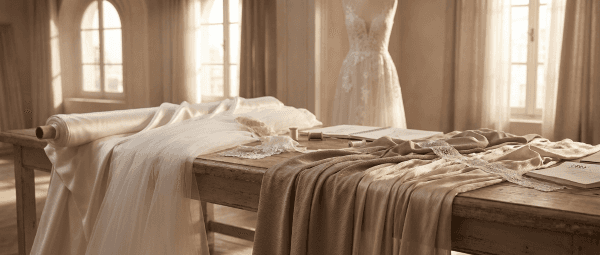
How to choose your wedding dress fabric
Choose your wedding dress fabric by deciding one question first: structure or fluidity. Structured fabrics such as satin and mikado hold architectural shapes. Fluid fabrics such as crepe, chiffon and soft tulle move with the body. Lace and embroidered tulle then add texture over either.
Season, venue and silhouette refine the choice from there. This guide compares the main bridal fabrics calmly, so you can name what you are drawn to before the design conversation begins.
The short answer
Satin and mikado build structure and shine, ideal for ball gowns and sculpted lines. Tulle creates soft volume and lightness. Crepe skims the body with matte, minimal elegance. Chiffon and organza float, suiting warm weather and movement. Lace and beaded tulle are texture layers that set the mood over any base. The right fabric is the one that matches your silhouette, your venue and the way you want to move.
What are the main wedding dress fabrics?
Satin and mikado
Smooth, substantial and softly lustrous. Satin sculpts. It holds pleats, builds grand skirts and gives minimal gowns their clean, expensive line. Mikado is its crisper, more structured relative, favored for architectural designs.
Tulle
Fine net that builds volume without weight. Layered tulle creates the classic ball gown cloud; a single soft layer adds dreaminess to simpler skirts. Glitter and shimmer tulles carry light for evening.
Crepe
Matte, fluid and quietly modern. Crepe follows the body without clinging harshly, which makes it the fabric of choice for minimal sheaths and understated mermaids.
Chiffon and organza
The floating fabrics. Chiffon is soft and weightless, organza crisper and more transparent. Both suit warm climates, outdoor ceremonies and gowns designed to move in air.
Lace and embroidered tulle
Texture rather than base. From fine Chantilly to dense guipure and beaded tulle, these layers define the mood of the gown more than any other single choice.
Should you choose a structured or fluid fabric?
Picture yourself moving, not standing.
If the image is a gown that holds its shape as you enter a room, you are structured: satin, mikado, corded lace over firm bases. If the image is fabric that trails, drifts and follows you, you are fluid: crepe, chiffon, soft tulle, Chantilly.
Many couture gowns combine both, a structured bodice above a fluid skirt, or clean satin softened by sheer sleeves. The contrast is often where the design comes alive.
How do season and venue change the choice?
Fabric is practical before it is beautiful.
For summer and coastal weddings, lighter fabrics breathe and move: chiffon, light tulle, crepe, fine lace. Heavy satin under strong sun asks a lot of the bride.
For winter and grand interiors, weight becomes an advantage. Structured satin, mikado and layered gowns sit beautifully in formal rooms and cooler air.
City ceremonies and intimate venues tend to favor cleaner fabrics that read elegantly at close range, which is where crepe and smooth satin excel.
How does fabric decide the silhouette?
Silhouette and fabric are one decision wearing two names.
A ball gown does not exist without a fabric that can build volume, whether crisp tulle or gathered satin. A minimal mermaid depends on crepe or satin cut precisely, since there is no decoration to carry the eye. A romantic A-line becomes itself through soft lace layers.
If you have chosen your silhouette, the fabric shortlist mostly writes itself. The collections pair each direction with its natural fabrics for this reason.
How does a couture atelier choose fabric with you?
In a made-to-measure commission, fabric is sourced for your gown rather than pulled from stock. The atelier weighs the design, your venue and your date, since fine fabrics and laces carry their own lead times.
Quality is judged in hand: how the fabric drapes, recovers and behaves under light. You describe the feeling you want; the atelier translates it into a specific cloth. The full sequence from direction to sourcing is described in the custom process.
How do fabrics feel across a long day?
A wedding day is ten hours of wearing, not ten minutes of mirror.
Crepe and chiffon are the light companions, breathing well and forgiving a full schedule. Soft tulle carries volume with surprisingly little weight. Structured satin and layered gowns are heavier by design, and couture corsetry carries that weight from the torso, which is what keeps grandeur comfortable.
Creasing is the other honest question. Crepe and tulle recover quickly, satin prefers careful sitting and a final steam, and lace barely registers the day at all. None of this should decide the gown on its own, but knowing it in advance is what calm feels like.
Questions brides ask
What is the most popular wedding dress fabric?
Soft tulle and fine lace lead for romantic gowns, while satin and crepe lead for structured and minimal designs. Popularity matters less than the match with your silhouette and setting.
Which fabric is best for a destination or summer wedding?
Chiffon, light tulle, crepe and fine lace travel and breathe well. They also recover from packing more gracefully than heavy structured fabrics, which matters for brides marrying abroad.
What fabric should a minimal wedding dress use?
Crepe and smooth satin are the minimal fabrics of choice. With no ornament to distract, the quality of the cloth and the cut becomes the entire design.
Can different fabrics be combined in one gown?
Yes, and the best couture gowns usually do. A structured base with sheer overlays, or lace concentrated over clean fabric, gives a gown depth without noise.
Fabric is the first thing a guest sees and the last thing a bride forgets.
When you are ready to turn a feeling into a fabric, the conversation starts with your date and direction.
Timeless advice,delivered to you.
No noise. Just thoughtful bridal guidance.
By subscribing, you agree to receive Lucidbride Journal emails. You can unsubscribe at any time. Read our Privacy Policy.
Timeless advice,delivered to you.
No noise. Just thoughtful bridal guidance.
By subscribing, you agree to receive Lucidbride Journal emails. You can unsubscribe at any time. Read our Privacy Policy.
Timeless advice, delivered to you
Guides, inspiration and atelier stories, straight to your inbox.
By subscribing, you agree to receive Lucidbride Journal emails. You can unsubscribe at any time. Read our Privacy Policy.